Practical routines · 2026
Meal planning for real schedules
Meal planning is not about predicting every appetite or making a perfect week. It is a way to reduce repeated decisions, use food thoughtfully and leave enough flexibility for work, travel, social plans and changing energy.
A plan may be a list of three evening meals, a short shopping route or a note about what can be assembled quickly. The right level of detail is the amount that helps without becoming another source of pressure.
Start with the week you have
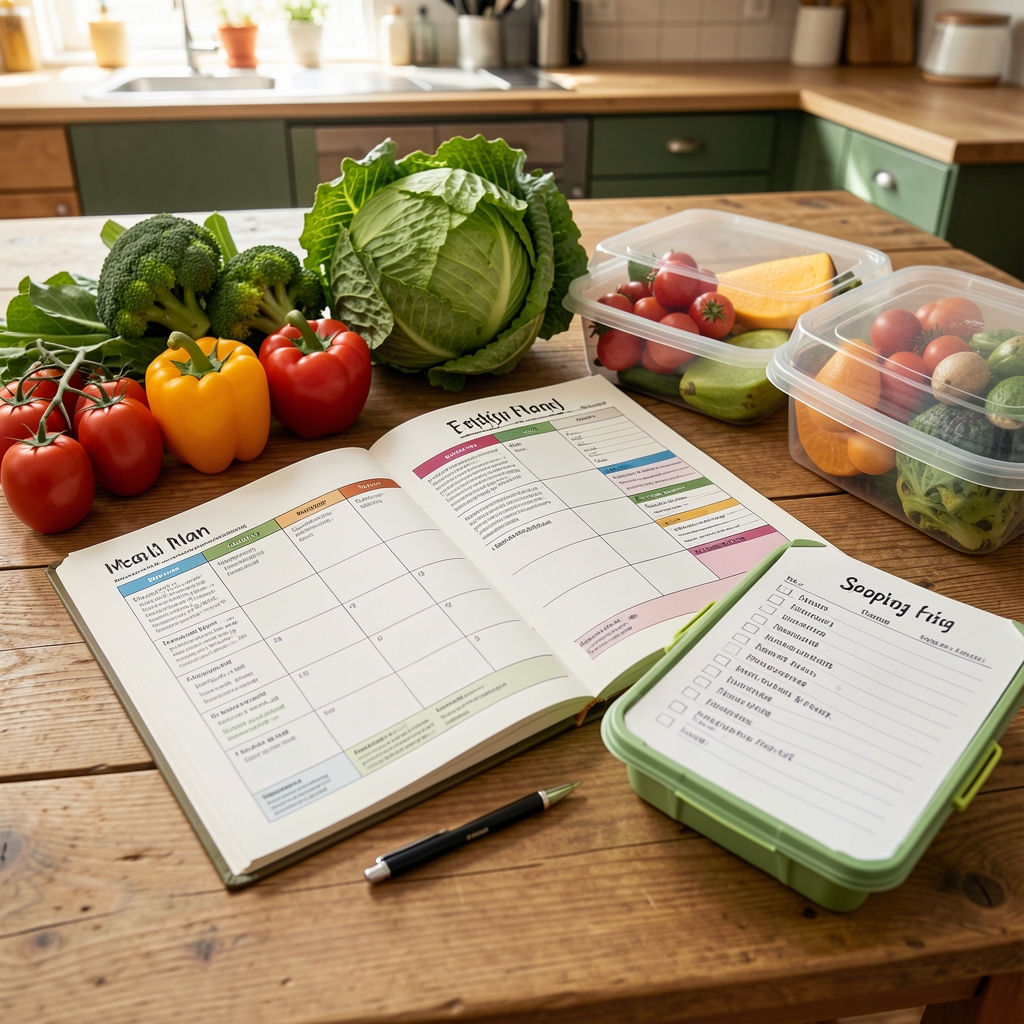
Before choosing recipes, look at the shape of the week. Identify late days, shared meals, leftovers and the equipment available. A plan that ignores those realities can create waste and frustration, while a modest plan can provide a reliable starting point.
- Mark meals that are already arranged.
- Choose one or two flexible recipes rather than a new recipe every day.
- Keep a quick option available for an unexpectedly busy evening.
- Use leftovers deliberately and store them safely.
A flexible framework
Plan components, not perfection
Many meals can be built from a base, a vegetable or fruit component, a source of protein and a flavour element. These categories are prompts, not rules. A sandwich, soup, bowl or shared dish can be adapted to the ingredients and preferences already present at home.
Planning in components also supports substitution. If a market item is unavailable, a frozen vegetable or another familiar ingredient may fit the same role. The aim is to make the plan resilient rather than dependent on one exact list.
A short planning checklist
- Check the calendar and available cooking time.
- Review food already in the cupboard, fridge and freezer.
- Select meals that share ingredients without becoming repetitive.
- Write a shopping list grouped by store section.
- Leave space for one unplanned meal.
Questions before shopping
- What will be eaten first?
- Which ingredients can be used twice?
- Is there a quick meal for a late return?
- How will leftovers be labelled and stored?
- Does the plan respect allergies or advice already received?
Planning by time and effort
| Situation | Useful preparation | Example |
|---|---|---|
| Ten-minute evening | Assemble familiar ingredients | Soup with bread and a simple side |
| Quiet weekend | Cook a flexible base | Grains or vegetables for several meals |
| Shared household | Offer adjustable components | Bowls with separate sauces and toppings |
| Busy morning | Prepare one item ahead | Overnight oats or washed fruit |
Leave room for change
Appetite, plans and energy change. A meal plan should be revised without being treated as a failure. If a plan repeatedly feels difficult, the useful question may be whether it asks too much of the available time, budget or equipment.
“A plan earns its place when it makes tomorrow a little easier, not when it looks impressive on paper.”
Common planning questions
How many meals should I plan?
Start with the number that matches your week. Planning three main meals may be more useful than planning every eating occasion.
What if I dislike leftovers?
Plan ingredients that can change form, such as roasted vegetables becoming a filling or a soup base, rather than repeating the same plate.
Should every meal be nutritionally complete?
Look at the pattern across the day and week. Personal needs differ, so use public guidance and professional advice as appropriate.
Review after the week
Notice what was easy, what was wasted and what you enjoyed. Keep the parts that reduced effort and alter the parts that created friction. This small review is often more informative than a complicated planning system.