Should dinner be early?
Timing depends on appetite, work and personal response. A regular pattern can be easier to observe than constant changes.
Daily rhythms · 2026
Sleep and health are connected through ordinary routines: timing, light, movement, stress, meals and the conditions in which rest becomes possible. Lorena’s guide looks at these relationships without treating sleep as a test to pass.
A single unsettled night can have many explanations, while a continuing change deserves a thoughtful conversation with a qualified professional. The useful starting point is often observation rather than judgement. A brief note about timing, caffeine, meals, movement and waking can help reveal questions without pretending to explain everything.
The body responds to patterns, but patterns are shaped by work, caring responsibilities, travel, pain, environment and access to quiet space. A routine should therefore be adjustable rather than rigid. Keeping a consistent wind-down period may be useful for one person, while another may first need to address noise, shift work or an uncomfortable room.
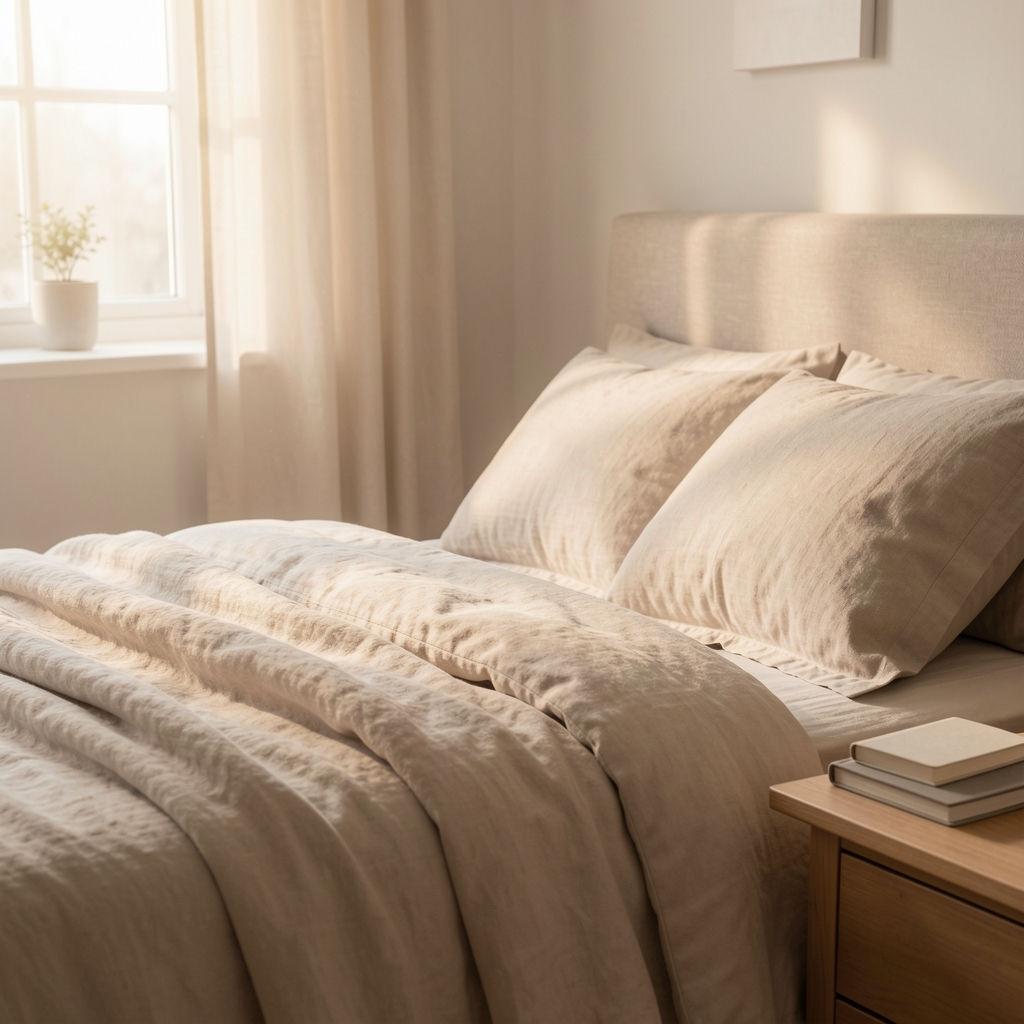
A calmer frame
Sleep advice can become overly narrow when it focuses on one product or one rule. A more useful review considers the transition from daytime activity to rest, including meals, alcohol-free evening choices, work messages, household noise and the expectations placed on the sleeper.
Food can be part of that picture. A heavy meal close to bedtime may feel different from a small snack, but individual responses vary. Lorena describes these examples as prompts for reflection, not universal instructions.
Adapt the order to your home, health and responsibilities.
Questions readers ask
Timing depends on appetite, work and personal response. A regular pattern can be easier to observe than constant changes.
A nap may fit some schedules and complicate others. Notice its timing and how it relates to the following night.
Consider a professional conversation when a persistent sleep change, breathing concern or daytime difficulty is affecting life.
“Rest is not a character test. It is a part of life shaped by biology, environment and circumstance.”
Read this page as general education, not as individual medical advice.